A new pipe built inside your old one: a resin liner is drawn through the existing line and cured in place, sealing every joint and crack — without digging a trench across your Greenwood yard, drive or garden.
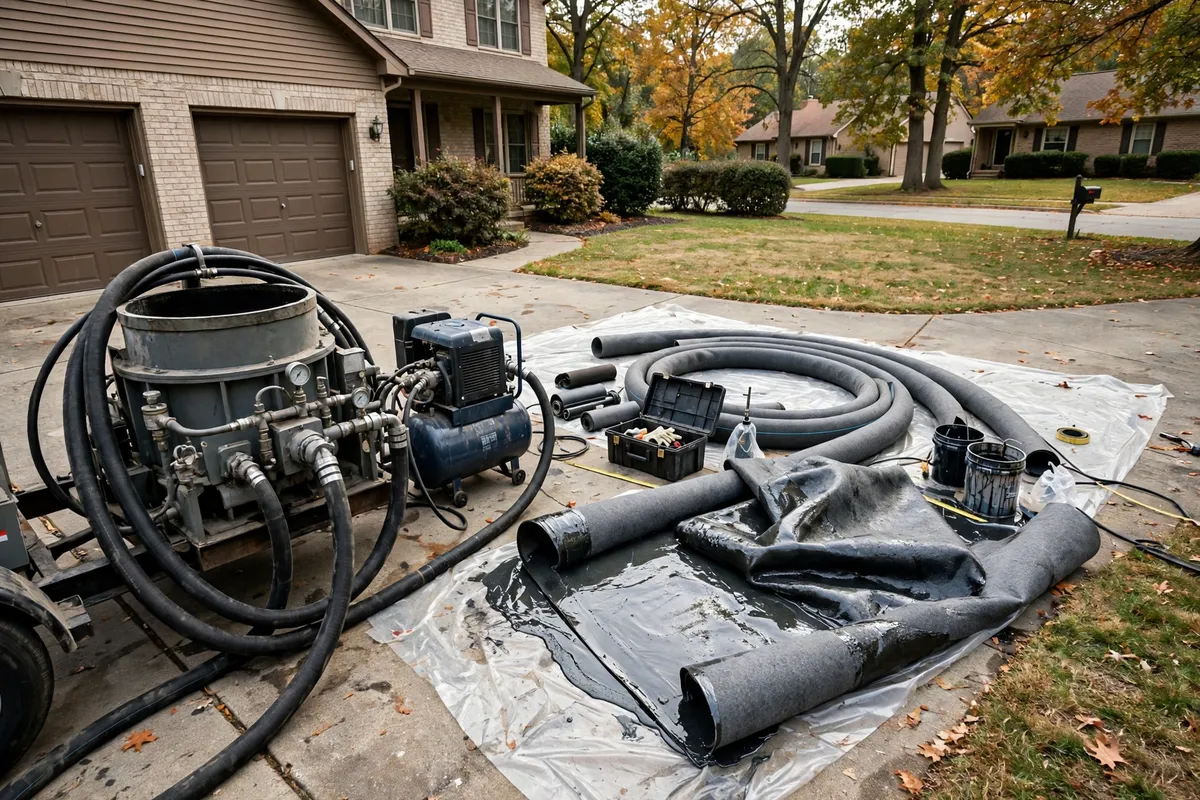
Relining renews a sewer from the inside. After the line is cleaned and filmed, a flexible liner saturated with resin is pulled or inverted into the old pipe and cured until it hardens into a smooth, jointless new pipe within the old one's shell. Roots lose their doorways — there are no joints left to enter. Cracks, offsets and corrosion are bridged. And the mature maple, the brick drive and the forty-year-old garden above the line never know it happened. For Greenwood's older streets, where the lines are failing and the landscaping is irreplaceable, it is often the single best answer in the trade.
It is not the answer for every line. A collapsed section cannot be lined; a severe belly will be faithfully reproduced in the liner; and a line too far gone needs excavation, not optimism. That is why the camera rules this page as it rules the whole site: the specialists behind this service line only the pipes the footage approves, show you the before and after, and tell you plainly when digging is the honest job. Done on the right pipe, a liner carries a service life measured in decades — commonly rated at fifty years.
Signs
Causes
How It Works
Full camera run: length, diameter, condition and every lateral connection mapped. Collapses or severe bellies disqualify the line honestly.
The line is jetted and, where needed, descaled — the liner bonds to the pipe's true surface, so the preparation is the job's foundation.
The resin liner is drawn through and cured in place, forming the new pipe; lateral connections are reopened robotically where they exist.
The finished liner is inspected end to end on camera, and the footage — before and after — goes into your property file.
Local Knowledge
If one service was made for Old Town Greenwood, this is it. Those streets combine the city's oldest pipes with its most established gardens — clay laterals failing joint by joint under maples that were planted when the houses were new, beneath brick walks and drives that no one alive wants to dig through. Relining threads that needle: the pipe is renewed, the tree keeps its shade, the garden keeps its decades. In the mid-century streets it does the same for cast iron, and in property sales across the city it has become the documentable, transferable fix that satisfies both sides of the closing table.
From the clay-tile streets of Old Town Greenwood and Worthsville to the newer lawns of Stones Crossing and Kensington Grove, the same service is tuned to the ground it works on. See the areas we serve for your neighbourhood's patterns, or return to Greenwood drain and sewer hub for the full picture.
Answers
Cured-in-place liners are commonly rated for a fifty-year service life. The material is inert, jointless and resistant to the root and corrosion pressures that killed the original pipe.
By a few millimetres of wall thickness — while removing the roots, scale and roughness that were stealing far more. Flow through a smooth lined pipe is typically better than the tired original ever delivered.
No. Collapsed sections, severe bellies and lines that have lost their shape need excavation or spot repair first. The survey decides, and a line that should not be lined will not be sold a liner here.
Most residential liners are installed within a day once preparation is complete, with drainage restored the same day in typical cases. Your water use is paused during the cure — the provider will walk you through the window honestly.
Keep Reading
Root masses cut back to the wall, joints assessed, and a regrowth plan in writing.
About tree root removal →The damaged section only: located to the foot, rebuilt, and re-filmed as proof.
About sewer line repair →See inside your own pipe — the evidence every honest quote in this trade should start from.
About sewer camera inspection →One call connects you with a local drain and sewer specialist serving Greenwood — camera-first diagnosis, methods matched to your pipe, options explained before anything is done.
Call (317) 555-0164