When a line is collapsed, rotted through or failing along its whole length, replacement is the honest job: a new lateral, bedded and graded properly, that ends the conversation for the rest of your ownership.
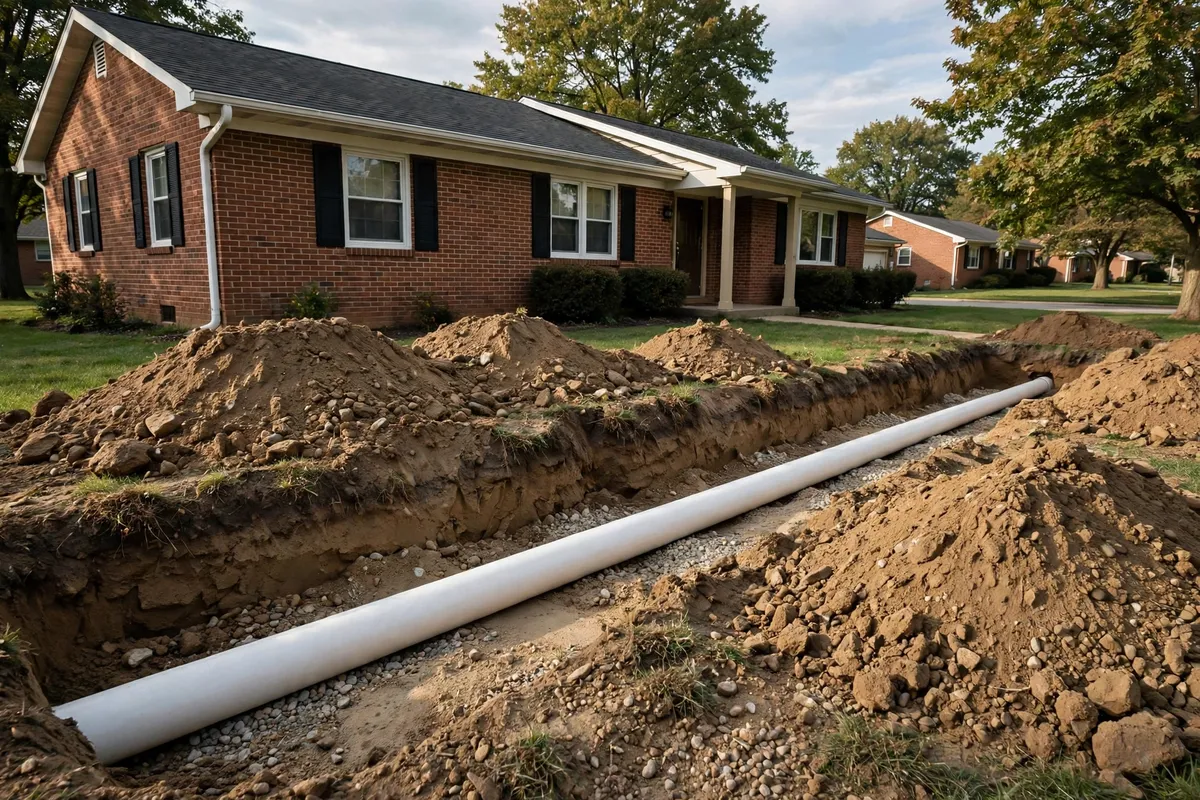
Replacement is the last resort and, for the right pipe, the best one. Some Greenwood lines have simply finished their service: clay shattered at every joint, cast iron rusted to lace, a run so bellied it ponds more than it flows. For those, another cleaning is a subscription and another repair is a postponement. A new lateral — modern pipe, proper bedding, true gradient, cleanouts placed where the future can reach them — resets the clock to zero and converts the most anxious system in the house into the most boring one.
The specialists behind this service recommend replacement only from footage, and they show you the footage. That discipline cuts both ways: it protects the homeowner whose line can be relined from an unnecessary dig, and it gives the homeowner whose line truly is finished the confidence that the big job is the right job. Replacement here is scoped precisely — the route surveyed, utilities located, depth and frost considerations handled for Indiana winters, and the property restored — and priced in writing before the first shovel.
Signs
Causes
How It Works
The old line is filmed and located end to end; depth, utilities, trees and surfaces along the route are mapped before scope is priced.
Replacement, relining or staged repair compared in writing where they genuinely compete — with the footage as the shared evidence.
The new lateral is laid in modern pipe on proper bedding at true grade, with accessible cleanouts, and connections made to house and main.
The new line is flow-tested and filmed, the trench is backfilled and compacted, and surfaces are restored as agreed.
Local Knowledge
Greenwood replacement work concentrates exactly where the city's age concentrates: the historic core's finished clay, the mid-century streets' finished iron, and the occasional newer line destroyed young by settling or roots. It also follows Indiana rules that generic advice misses — laterals buried with the frost line in mind, bedding that respects clay soil's movement, and cleanouts placed for the next fifty winters, not the next five. A replacement here is a once-per-ownership piece of infrastructure; done with that seriousness, it is the last sewer conversation the house ever asks its owner to have.
From the clay-tile streets of Old Town Greenwood and Worthsville to the newer lawns of Stones Crossing and Kensington Grove, the same service is tuned to the ground it works on. See the areas we serve for your neighbourhood's patterns, or return to Greenwood drain and sewer hub for the full picture.
Answers
Most residential laterals are replaced in one to three days of excavation, depending on length, depth and what the line passes under. Drainage is interrupted as briefly as the tie-ins allow, and the provider will give you the honest day-by-day before work starts.
Almost never. Water use is limited during working hours on tie-in days; evenings are normally back in service. Anything more disruptive would be flagged in the written scope before you agree to it.
No — for a structurally sound line, relining delivers decades with no trench at a lower cost. Replacement wins when the old pipe has collapsed, lost its grade, or failed throughout. The footage, not the invoice size, decides.
Modern PVC or equivalent approved material, bedded in stone or sand as conditions require, at a gradient that will still be right when the soil has finished moving. The specifics for your run are set out in the written scope.
Keep Reading
The damaged section only: located to the foot, rebuilt, and re-filmed as proof.
About sewer line repair →A jointless new pipe cured inside the old one — roots locked out, yard untouched.
About trenchless pipe relining →See inside your own pipe — the evidence every honest quote in this trade should start from.
About sewer camera inspection →One call connects you with a local drain and sewer specialist serving Greenwood — camera-first diagnosis, methods matched to your pipe, options explained before anything is done.
Call (317) 555-0164