Sewage rising, a basement taking water, or the whole house stopped at the worst possible hour — emergency service triages by danger, arrives with the heavy equipment, and starts with the fix that stops the damage.
Drain emergencies do not keep office hours, and in Greenwood they keep storm hours: the line lets go during the downpour, the pit quits on the holiday weekend, the main chooses the night before guests arrive. Emergency drain service exists for the failures that cannot wait for a convenient slot — active backups, sewage in living space, a home's only bathroom out of service, water rising anywhere it can do damage. The call is answered around the clock, and the triage is by severity, not by who phoned first.
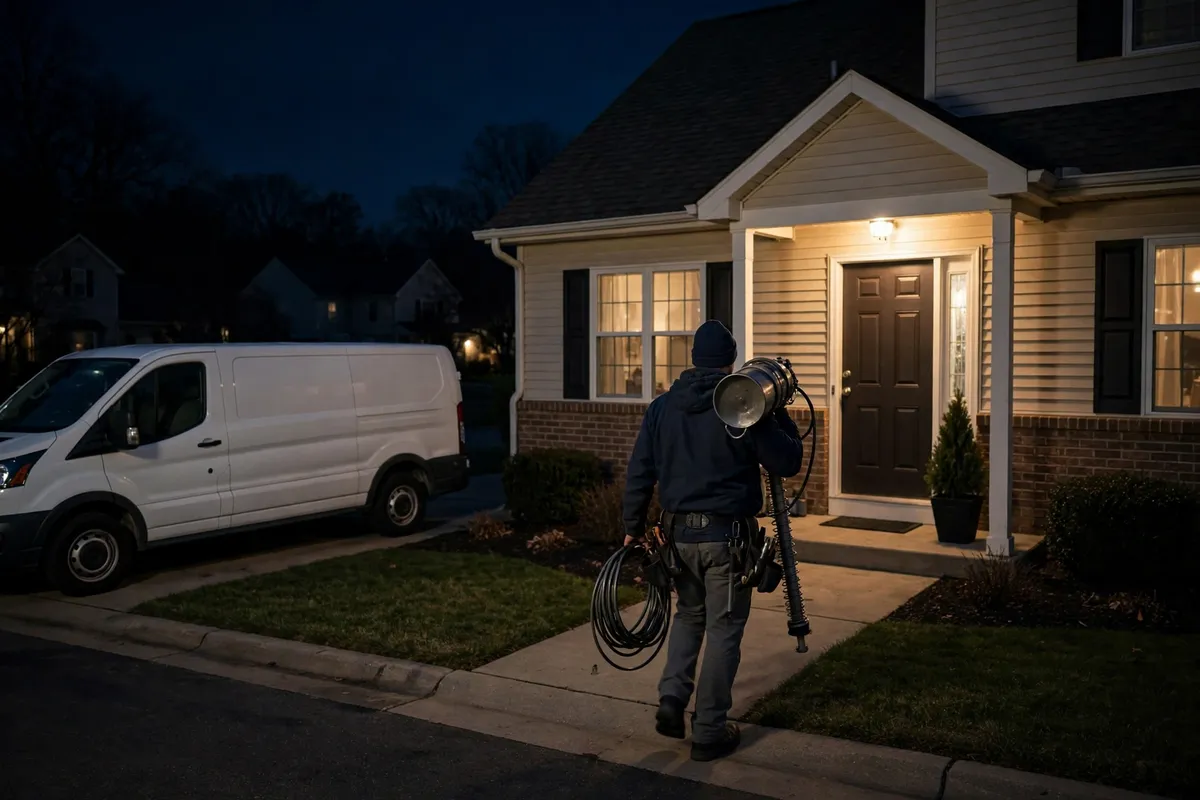
What arrives is the full diagnostic kit, not a plunger and a shrug: heavy cables, a jetter, a camera, pit equipment. That matters because the emergency fix and the real fix are often different jobs — the first hour stops the damage and restores the house; the camera then explains what happened while the evidence is fresh. You will be told plainly which you are buying at each stage: tonight's stabilisation, and the permanent repair it points to, quoted in writing when the floor is dry and nobody is standing in water making decisions.
Signs
Causes
How It Works
Rising water and sewage first. You will be told what to do in the next ten minutes — stop water use, protect electrics, which valve is worth touching — before anyone is dispatched.
The blockage is cleared or the pit restored enough to stop the damage and return essential fixtures to service.
Camera in the line, pit inspected — the emergency's cause identified the same visit wherever the conditions allow.
What tonight bought you, what it did not, and the costed options for finishing the job properly — decided in daylight, not in water.
Local Knowledge
Greenwood's emergencies have a calendar and a map. The calendar is the storm season — May through August's convective downpours — plus the two great indoor surges of Thanksgiving and Christmas. The map is basements: the mid-century streets where pits and clay mains are both old, and the low ground where storm water arrives fastest. The specialists behind this service run those nights every year and know the pattern cold — which is worth remembering at 2 a.m.: the voice on the phone has stood in your exact flood before, on your exact street pattern, and knows which of the three culprits it almost certainly is.
From the clay-tile streets of Old Town Greenwood and Worthsville to the newer lawns of Stones Crossing and Kensington Grove, the same service is tuned to the ground it works on. See the areas we serve for your neighbourhood's patterns, or return to Greenwood drain and sewer hub for the full picture.
Answers
Active sewage, rising water, a whole house stopped, or the only toilet out of use. A single slow sink is urgent to you but not an emergency — it will be scheduled promptly and honestly, at normal terms.
Stop all water use. Keep clear of the water, especially near anything electrical. Move what you can off a flooding floor. Then call and describe exactly what is rising, where, and how fast — that description is the dispatch.
Sometimes — a failed pump or a simple plug can be finished outright. Structural work is stabilised at night and quoted for daylight. Anyone promising major excavation at 3 a.m. without a camera is guessing with your money.
Out-of-hours response is priced accordingly by the provider, and you will be told the terms before dispatch, not after arrival. Stabilisation and permanent repair are quoted as the separate things they are.
Keep Reading
Main line, ejector pit or city surcharge — the flood's real author found and fixed.
About sewer backup repair →A stopped drain cleared — and its cause found, so the stoppage is solved rather than rescheduled.
About clogged drain repair →The main line restored to full bore: roots, grease and scale removed and the result filmed.
About sewer line cleaning →One call connects you with a local drain and sewer specialist serving Greenwood — camera-first diagnosis, methods matched to your pipe, options explained before anything is done.
Call (317) 555-0164