When Greenwood's summer storms drop inches in an hour, the water goes where the storm drains let it. Cleaning keeps inlets, catch basins and storm lines at full capacity — before the sky tests them.
Storm drains are the plumbing nobody owns emotionally and everybody depends on absolutely: the curb inlets on your street, the catch basins in your subdivision, the yard drains and the lines that carry roof and surface water away. They clog unglamorously — leaves, sediment, mulch, construction grit, the occasional basketball — and they announce their failure the way all storm infrastructure does: at the worst moment, in public, in the rain. Storm drain cleaning is the unglamorous maintenance that keeps the announcement from happening.
For Greenwood, where summer thunderstorms are serious events and half the city's backyards sit lower than their streets, the service spans private and shared systems: subdivision inlets and basins, HOA storm lines, yard and area drains, and the discharge lines from sump systems that must never be allowed to choke. The specialists behind this service jet lines, vacuum basins and verify outfalls — and, because this is basement country, always check that the storm system and the house's own drainage are not quietly conspiring against a foundation.
Signs
Causes
How It Works
Inlets opened, basin sumps measured for sediment depth, outfalls located and checked — the system's true state before any cleaning.
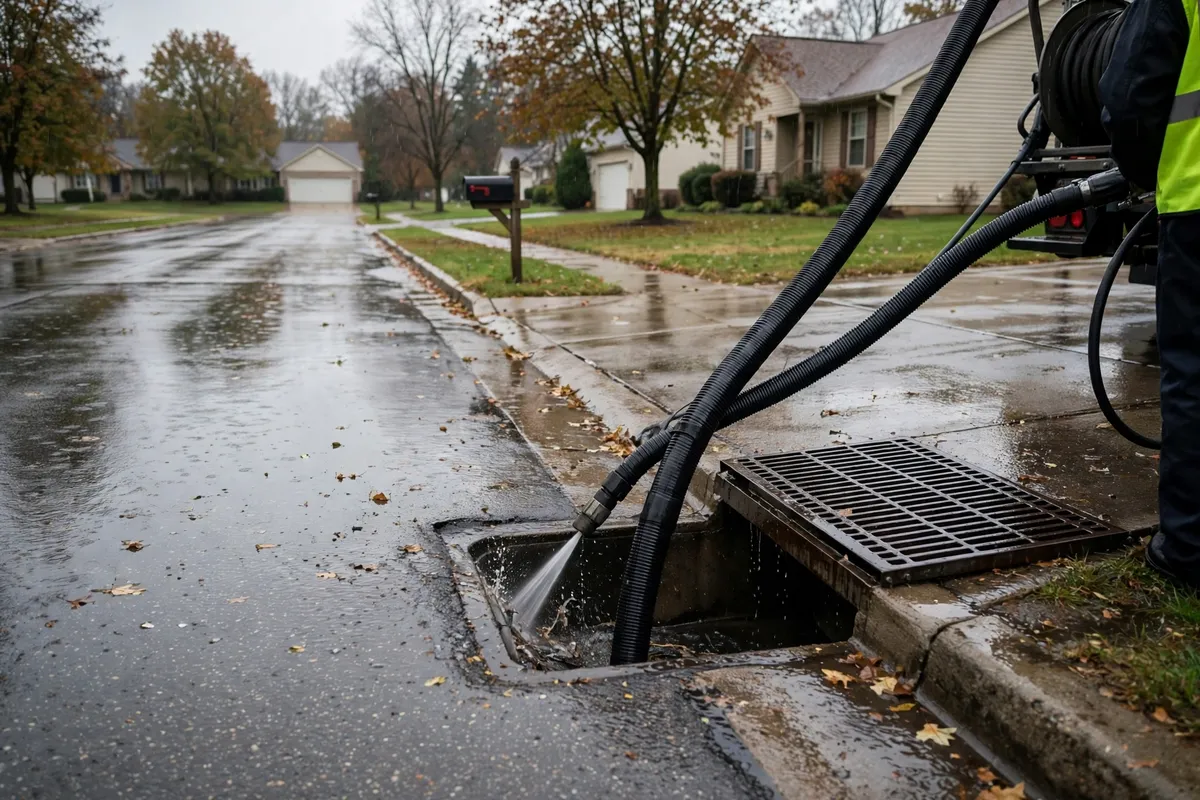
Basins vacuumed to their floors, inlets cleared, trapped debris removed rather than pushed downstream.
Storm runs jetted from basin to outfall, moving the sediment the survey found, with the outfall watched to confirm arrival.
Sediment depths and intervals recorded, so an HOA or owner can schedule by evidence — usually a one-to-two-year rhythm in the leafy areas.
Local Knowledge
Greenwood's storm story is written by its flatness. Water that falls on the southern subdivisions does not hurry anywhere; it gathers, and the difference between a street that drains and a street that ponds is often a single season of leaves in a single basin. Add the city's pattern — intense convective storms that deliver a month of rain in an afternoon — and storm maintenance stops being civic housekeeping and becomes flood prevention with a hose. The neighbourhood pages on this site note which areas pond first; this is the service that keeps them off that list.
From the clay-tile streets of Old Town Greenwood and Worthsville to the newer lawns of Stones Crossing and Kensington Grove, the same service is tuned to the ground it works on. See the areas we serve for your neighbourhood's patterns, or return to Greenwood drain and sewer hub for the full picture.
Answers
The street system itself is the city's. Drains on your property — yard drains, driveway inlets, your sump discharge — are yours, and HOA systems belong to the association. If you are unsure where yours ends, a survey visit will map it plainly.
When the sump's sediment approaches the outlet — in leafy Greenwood, checking every year and cleaning every one to two years is the common rhythm. Basins under heavy canopy fill fastest.
Yes — locating and filming storm lines is part of the survey. Many Greenwood homeowners discover their yard drain ties into a line they have never seen, which is exactly why it has never been cleaned.
Directly, in the houses where yard and footing drainage share capacity with the sump system. A choked discharge or overwhelmed inlet raises the water the pit must fight. Storm visits here always glance at that relationship.
Keep Reading
Main line, ejector pit or city surcharge — the flood's real author found and fixed.
About sewer backup repair →Scheduled, off-hours drain programmes for Greenwood's corridors and multi-family stock.
About commercial drain cleaning →The main line restored to full bore: roots, grease and scale removed and the result filmed.
About sewer line cleaning →One call connects you with a local drain and sewer specialist serving Greenwood — camera-first diagnosis, methods matched to your pipe, options explained before anything is done.
Call (317) 555-0164