A city built over its own plumbing
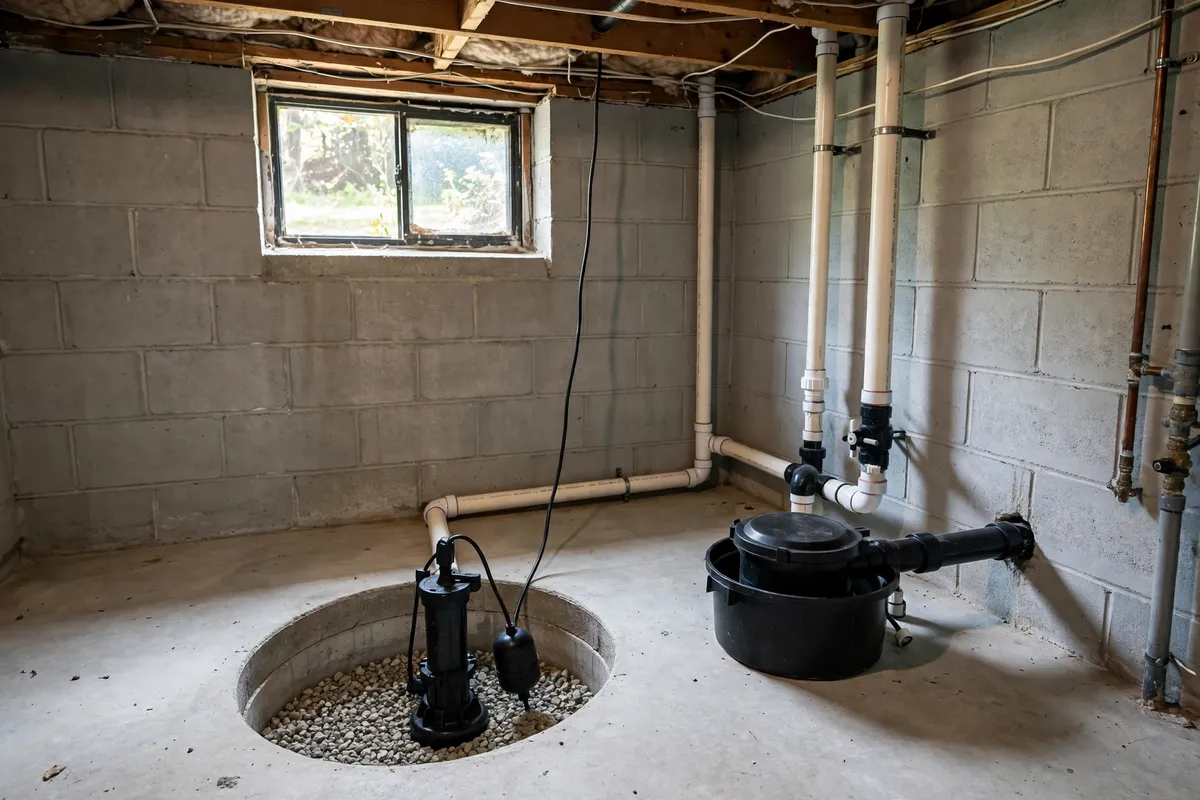
Start with the local fact that explains all the others: the typical Greenwood home does not drain straight to the sewer. Its basement sits below the level of the street main, so the lowest plumbing — and in many homes the whole house's flow — passes through an ejector pit, a sealed basin in the basement floor with a pump that lifts wastewater up to the main line's level. Add the sump pit beside it, managing groundwater from the footing drains, and you have the truth of Greenwood drainage: two pumps stand between the average basement and the water that wants to be in it. Backups here are rarely mysterious. They are what happens when one of three systems — the main line, the pit, or the city's own line under storm load — stops doing its part.
Author one: your own main line
The first suspect is the lateral between your house and the street. Roots in Old Town clay, scale in any era's pipe, grease at a narrowed bend — a restriction there means your house's water leaves slowly or not at all, and the excess appears at the lowest opening, which is a basement floor drain or the pit itself. The signature is a dry-weather backup: it happens on your schedule — laundry day, guests, a long shower — not the weather's. The fix is the line's fix: a camera, a cleaning or the repair the footage demands. No valve or pump anywhere can compensate for a main that will not pass water.
Author two: the pit and its pump
The second suspect is the ejector system itself, and it is the most Greenwood of the three. Ejector pumps live seven to ten years, fail without ceremony, and — this is the cruel part — usually fail under load, during the storm or the house-party that needed them most. Their check valves fail more quietly still, letting each pumped load drain back into the pit until the pump is effectively lifting the same water forever and the pit fills anyway. The signature is a basement-level problem with healthy upstairs drainage and, often, a pit found full and silent when anyone finally looks. The fix is mechanical and honest: pump, valve, pit serviced — and a yearly check thereafter, because this author always returns on the same decade schedule.
Author three: the city's water, visiting
The third suspect arrives only with weather. In a major storm, the municipal line can run completely full; pressure then seeks every lateral connected to it, and the water that rises in your basement may be the street's, not yours. The signature is unmistakable once you know it: a storm-night backup, several neighbours reporting the same, water rising even though the house is using nothing. No cleaning of your line prevents it — your line is not the problem. The answer is a backwater valve on your lateral: a one-way gate that lets your water out and refuses the city's entry. Installed and maintained, it converts the scariest backup author into the only one that is simply, permanently solved.
Reading your own flood
The three authors leave different evidence, and a homeowner who can read it saves the first hour of every specialist visit. Ask three questions. When did it happen — my schedule or the sky's? What rose — sewage from the floor drain, or a pit at the lid? And what do the upstairs fixtures do — drain freely, or join the complaint? Dry weather plus a full pit is the pump. Storm plus the whole street is the city. Any weather plus generally slow drainage everywhere is the main. Photograph everything as it stands, note the answers, and the call you make afterwards will be the shortest diagnosis in the trade.
The prevention stack, in order
Ranked by what they prevent per dollar: first, the annual pit check — pump exercised, valve tested, pit cleaned — because the best backup is the one whose author was serviced in advance. Second, a camera survey of the main on a rhythm your line's age sets, because restrictions found on film are cleanings, and restrictions found by flood are emergencies. Third, for any home that has met the city's water even once, the backwater valve — the only fix on this list that retires its author entirely. Greenwood basements stay dry for decades behind that stack. The flooded ones, almost without exception, were missing whichever layer their particular author required.
Dealing with the problem right now? The Greenwood drain services pages cover each fix in the same plain language, and the homepage explains how this referral service works.
Talk to a Greenwood drain specialist
One call connects you with a local drain and sewer specialist serving Greenwood — camera-first diagnosis, methods matched to your pipe, options explained before anything is done.
Call (317) 930-2241